


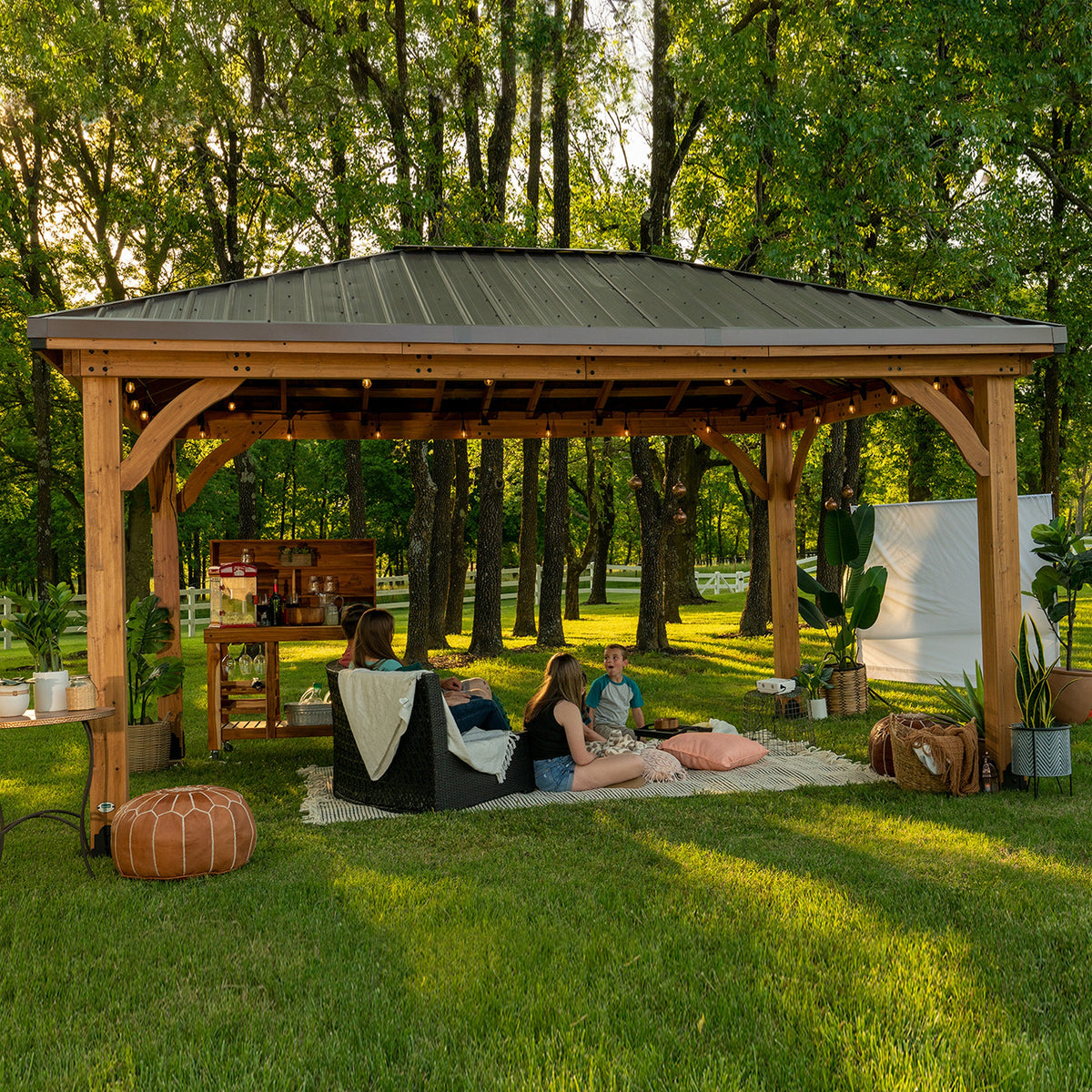
A gazebo is a substantial investment and one that's designed to be a permanent, year-round feature of your garden. But even the most solidly built structure needs to be properly anchored to the ground to perform the way it was designed to. In the UK, where wind and unpredictable weather are facts of life rather than occasional inconveniences, anchoring isn't optional. It's what allows your gazebo to do its job safely and reliably, whatever the season throws at it.
The good news is that anchoring a gazebo is straightforward when you know what you're working with. The method that works best for you will depend largely on the surface in your garden, and this guide will walk you through the main options clearly.
Why Anchoring Matters
An unanchored gazebo, regardless of how well it's built, is a risk in high winds. A structure that shifts, tips or is lifted by strong gusts can cause damage to your garden, your property and potentially to anyone nearby. Proper anchoring eliminates that risk and ensures the structure performs exactly as intended.
Backyard Discovery's gazebos are PRO-TECT™ Tested and Proven to withstand winds of up to 100 mph, but that rating applies to structures that are correctly installed and securely anchored. The engineering is only as effective as the foundation beneath it.
Anchoring to Grass or Soil
If your gazebo will be installed on a lawn or bare soil, ground anchors are the most common and practical solution. These are heavy-duty steel stakes or auger-style anchors that screw or drive into the ground and attach directly to the base of the gazebo's posts.
For a permanent installation on soft ground, concrete footings offer even greater stability. This involves digging a hole at each post location, setting the post (or a post bracket) in position, and pouring concrete around it to create a solid, fixed footing. Once cured, this method provides maximum resistance to wind uplift and lateral movement and is ideal for larger gazebos or exposed garden positions.
If you go the concrete footing route, it's worth taking time to get the positioning right before you pour, as the installation will be essentially permanent. Check the gazebo's footprint carefully against your space and confirm that the post positions are level before committing.

Anchoring to Paving or Concrete
Many UK gardens have patio areas made from slabs, flags or poured concrete, and these make an excellent base for a gazebo provided you anchor into them correctly. The method here is to use expansion bolts or anchor bolts, which are drilled into the hard surface and provide a secure fixing point for the post base plates.
This approach gives you a clean, tidy installation with no visible hardware beyond the post bases. It's also fully reversible if you ever want to reposition or remove the structure, as the bolts can be removed and the holes filled.
Before drilling, always check for any underfloor utilities such as cables or pipes that may run beneath your patio. If you're unsure, it's worth consulting a professional before proceeding. It's also worth confirming that your paving or concrete base is in sound condition, as cracked or unstable slabs won't provide reliable anchorage.
Anchoring to Decking
Decking is a popular base for gazebos in UK gardens, and with the right approach it can be perfectly secure. The key is to anchor through the decking boards and into the structural joists beneath, rather than into the boards alone. Boards without joist support will not hold a fixing reliably under load.
Use heavy-duty lag screws or coach bolts long enough to pass through the decking surface and engage firmly with the joist below. If your deck joists don't align with the intended post positions, a qualified carpenter or builder can add blocking between joists to create a proper fixing point.
It's also worth considering the condition and age of your decking before installing a gazebo on top of it. A structure that's going to stand for years needs to be on a base that will too.
A Few Things to Check Before You Begin
Whichever surface you're working with, there are a few universal principles worth keeping in mind. Always follow the installation instructions provided with your specific gazebo model, as fixing requirements can vary between structures. Ensure all fixings are rated for outdoor use and are resistant to corrosion; stainless steel or galvanised fixings are the right choice for a permanent UK garden installation. And once the structure is up, make a habit of checking the anchor points as part of your seasonal maintenance routine, tightening any fixings that may have loosened over time.
Installing with Confidence
A properly anchored gazebo will serve your garden reliably for many years, providing a sheltered space for entertaining, dining and relaxing through every season. Whether you're setting up on grass, paving or decking, taking the time to anchor correctly is the single most important step in getting the most from your structure.
Explore Backyard Discovery UK's full range of gazebos, all PRO-TECT™ Tested and Proven to withstand winds up to 100 mph and backed by our industry-leading 5-Year Limited Warranty. Built to last and built to stay put.


Leave a comment
This site is protected by hCaptcha and the hCaptcha Privacy Policy and Terms of Service apply.