


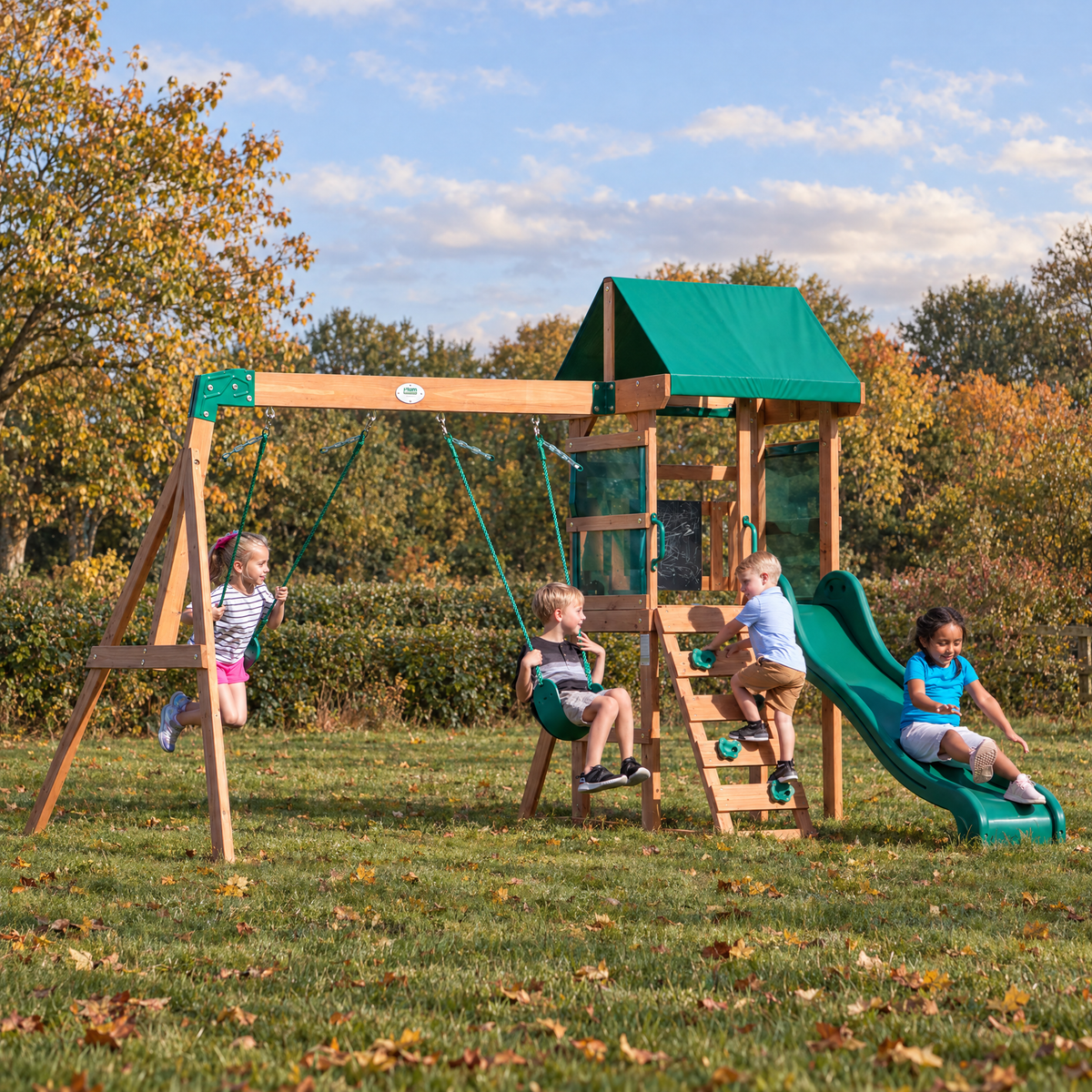
The garden looks different in October. The light changes, the evenings close in earlier and there is a particular kind of quiet that settles over outdoor spaces as the season turns. If you have a pergola, gazebo, climbing frame or playhouse in your garden, this is exactly the right moment to spend an hour or two making sure it is ready for whatever the coming months bring.
A little attention now pays back in full. Structures that are properly prepared for autumn and winter will come through in better condition, last longer and need less work when spring arrives. Here is what to do.
Start with a Thorough Inspection
Before you do anything else, walk around your structure and look at it properly. Not a glance as you pass by, but a deliberate check with fresh eyes.
On a pergola or gazebo, look at the condition of the roof first. Check for any debris that has collected in the beams or guttering, and clear it out before it traps moisture over winter. On the posts, look for any areas where the wood has started to show signs of wear, cracking or discolouration. On a steel structure, check for any chips in the powder coating where rust could take hold.
For climbing frames and playhouses, look at the platform areas and any joints where two pieces of timber meet. These are the spots where water can sit and work its way into the wood if they are not well maintained.
Treat Your Cedar Before the Cold Sets In
Cedar is an exceptionally durable timber. It handles the British climate well, it resists rot naturally and it holds up to years of use. But it does benefit from an annual treatment to keep it in the best possible condition, and autumn is the right time to do it.
Before applying any sealant or treatment, make sure the wood is clean and dry. A mild day with no rain forecast is what you are looking for. Brush away any surface dirt and allow the wood to dry fully before you start. Apply an outdoor wood sealant evenly along the grain, paying particular attention to end grain and any areas that have been showing signs of weathering. One thorough coat done properly is more effective than a rushed application on a damp afternoon.
Treated cedar going into winter is treated cedar that comes out looking well in spring.

Check Every Fixing and Connection
Wind is the biggest threat to any garden structure in the UK winter, and the weakest point in any structure is not usually the material itself. It is the connections.
Work your way around every anchor point, bolt and bracket. Give each one a firm check by hand. Any fixing that has worked loose over the course of a busy summer should be tightened now, before conditions get worse. On a climbing frame, pay close attention to the swing hangers and any hardware that has been under repeated load through the season.
If you notice any fixings that have corroded or degraded, replace them before winter rather than leaving them to deteriorate further. Stainless steel or galvanised replacements are the right choice for outdoor structures that will be standing year-round.
Clear Out Soft Furnishings and Accessories
Cushions, outdoor rugs and fabric accessories were not designed to survive a British winter outdoors. Even under a gazebo with a solid roof, the combination of cold, condensation and extended damp will reduce their lifespan considerably.
Bring anything fabric indoors now. Clean cushions and soft furnishings before you store them rather than putting them away dirty. A small amount of effort at this stage means they will come out in good condition when warmer weather returns.
For climbing frames, it is worth removing any soft play accessories or fabric elements that are not designed for permanent outdoor exposure. The structural timber itself will be fine. Fabric tunnels, rope nets and similar attachments will fare better in storage.
Protect Climbing Plants on Your Pergola
If you have established climbing plants on a pergola, autumn is the time to tidy them up before winter growth slows. Cut back any growth that has become too heavy or is putting pressure on the structure. Check that any ties or fixings attaching the plant to the timber are not cutting into the wood as the plant has grown through the season.
Some climbing plants benefit from a light mulch around their base to protect the roots through frost. A gardening centre will advise on the specific needs of your plant variety, but as a general rule, the healthier the plant going into winter, the stronger it will return in spring.
Know What Your Structure Can Handle
Backyard Discovery structures are built to perform in real British conditions. All pergolas and gazebos are PRO-TECT™ Tested and Proven to withstand winds of up to 100 mph, and the gazebo roofs are rated to hold significant snow load without bending or warping.
That resilience is built in. What the preparation steps above do is make sure the structure goes into winter performing at its best, with every component in good order and every connection properly secured.
A structure you have prepared properly is one you can stop worrying about.
Explore the full range of pergolas, gazebos and climbing frames from Backyard Discovery UK, all backed by our industry-leading 5-Year Limited Warranty. Built for every season.


Leave a comment
This site is protected by hCaptcha and the hCaptcha Privacy Policy and Terms of Service apply.